How to Get a Desentupidora Nova Odessa SP: Requirements, Procedure and Checks
If you need a desentupidora Nova Odessa SP, the direct answer is this: call a local emergency service, confirm the address and the type of blockage, and ask for a fixed call-out fee before any work starts. The technician should arrive with a cable machine, a hydro-jetting unit or a vacuum truck, depending on whether the problem is in a sink, a floor drain, a toilet or the main sewer line. In most cases, the job is diagnosed on site, and the price depends on access, pipe diameter and how far the obstruction sits from the inspection point.
I have handled these tickets from the support side, so this is not a generic overview. It is the sequence I would walk a caller through: what to have ready, what the team will do, and what to check before you sign off on the service. The same logic applies whether you are a homeowner in Nova Odessa, a shop owner near the central area, or a building manager handling a backed-up drain at night.
What a Desentupidora Nova Odessa SP Needs From You Before the Visit
The first call is mostly about information. A good dispatcher will not just take your address and hang up; they will ask what is backing up, where it is backing up, and whether it has happened before. That saves a second trip and helps the crew load the right equipment. If you are searching for a desentupidora Nova Odessa, have these details ready before you dial.
Address, access and property type
Give the full street address, including any block or lot reference, and say whether the property is a house, an apartment, a commercial kitchen or an industrial shed. Access matters: a truck-mounted hydro-jetting unit needs room to park and a hose run of manageable length. If the cleanout is in a back yard behind a locked gate, say so. If the building has a service elevator or a loading dock, mention it. These small facts decide whether the crew arrives with a portable machine or a truck.
Symptoms and recent history
Tell the dispatcher what you see and smell. Slow drains in one sink are different from water rising in a floor drain when you run the washing machine. A gurgling toilet after a shower usually points to a shared branch line, while a single slow sink is often a local trap issue. Also mention any recent work: a new bathroom, a kitchen remodel, a grease trap that has not been cleaned, or heavy rain the night before. Each of those changes the likely cause and the tool the technician will start with.
Who is responsible for the pipe
In a rented house or a condominium, confirm who authorizes the service. A tenant can usually call for an emergency, but the owner or the building manager may need to approve the invoice. If the blockage is in the common sewer line, the condominium administration is the client, not the individual unit. Getting this clear on the phone avoids a technician standing in the hallway waiting for a signature while sewage backs up.
Payment and timing expectations
Ask for the call-out fee, the estimated hourly rate and the payment methods accepted on site. Emergency work at night or on a weekend often carries a different rate, and that should be stated up front. If you need a receipt for a company expense, say so before the visit. A professional desentupidora em Nova Odessa SP will confirm these points without pressure.
The Procedure a Desentupidora in Nova Odessa SP Follows on Site
Once the crew arrives, the work follows a fairly consistent order. The exact tools change with the diagnosis, but the sequence is the same. Understanding it helps you ask the right questions and spot a shortcut that could damage your pipes.
Step 1: Inspection and diagnosis
The technician starts by locating the cleanout, the inspection box or the floor drain and checking the water level. They may run a small amount of water to see how the level reacts. In many cases, a camera inspection is offered for recurring blockages, because it shows whether the problem is grease, roots, a collapsed section or a foreign object. This step is not optional if the blockage has come back more than once.
Step 2: Choosing the method
The method depends on the pipe and the obstruction:
- Cable machine (manual or electric): best for sinks, toilets and short branch lines where grease, soap or paper is the cause.
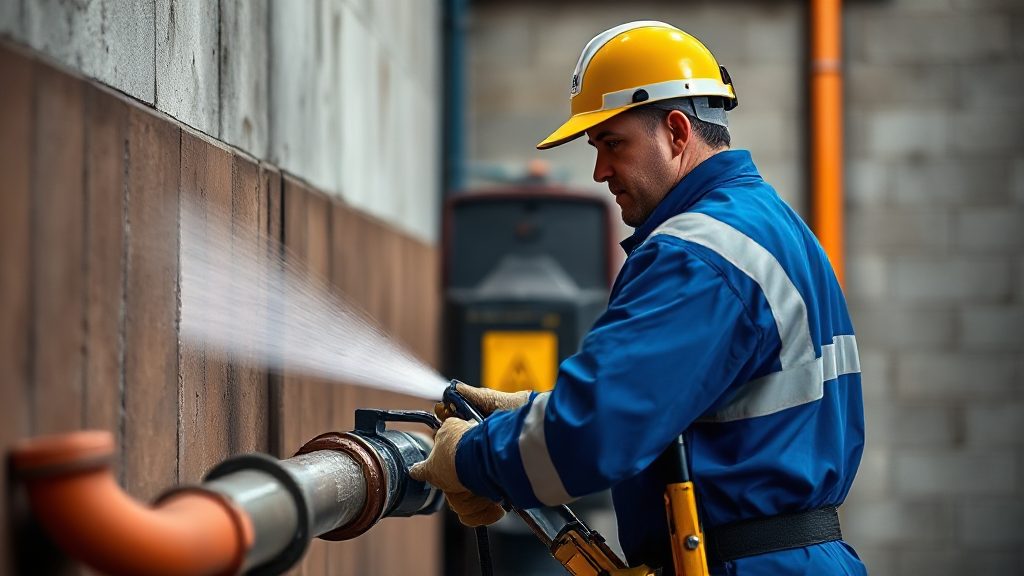
- Hydro-jetting: a high-pressure water jet that scours the pipe wall; used for grease-heavy kitchen lines and main sewer runs.
- Vacuum truck: removes standing water and sludge from inspection boxes, septic tanks and large-diameter lines.
- Camera inspection: confirms the result and finds cracks, roots or misaligned joints that a cable cannot fix.
A technician who skips the diagnosis and goes straight to a cable on a main line may clear the symptom without finding the cause. That is the most common mistake I see in these tickets.
Step 3: Executing the desobstruction
The technician feeds the tool through the cleanout, not through a sink overflow or a toilet bowl unless there is no alternative. Feeding a cable through a fixture can scratch porcelain and, worse, push debris deeper into the branch. During hydro-jetting, the pressure is adjusted to the pipe material; older clay or PVC lines cannot take the same pressure as cast iron. The crew should also protect the floor and surrounding area with sheeting before starting, especially in a finished kitchen or bathroom.
Step 4: Testing and cleanup
After the blockage is cleared, the technician runs water through the line and watches the level at the inspection point. A proper test includes running several fixtures at once, not just one tap. Then the crew removes the debris, rinses the area and disposes of the waste. Ask where the waste goes; in a septic system, it should not be dumped back into the tank without treatment.
What to Check Before You Approve the Invoice
The job is not finished when the water goes down. Before you sign, walk through these checks. They take a few minutes and prevent a repeat visit.
Flow test at multiple fixtures
Run the sink, the shower and the toilet at the same time if they share a branch. Watch the floor drain and the inspection box. If the level rises, the line is not fully clear. A technician who only tests one fixture is leaving you with a partial result.
Cleanout caps and access points
Confirm that every cleanout cap was replaced and tightened. An open cleanout is a direct path for sewer gas and, in a heavy rain, for water. Check that the cap threads are not cross-threaded and that the area around the cleanout is backfilled or resealed if it was opened.
Written description of the work
Ask for a simple written note of what was done: the method used, the length of cable or the pressure setting, and whether a camera inspection was performed. This is useful if the blockage returns within a few weeks, because the next technician can see what was already tried. It also supports any warranty the company offers.
Signs of damage or incomplete work
Look for water stains on the floor, loose fittings, a toilet that rocks, or a cleanout that was left without its cap. If the crew used a cable, ask whether the cutting head was retrieved. A lost head in the line will cause a new blockage within days. Any of these issues should be noted before payment.
Costs, Timing and Trade-Offs for Nova Odessa Properties
Prices in Nova Odessa follow the same pattern as in the wider São Paulo region: a call-out fee, a per-meter or per-hour charge, and an extra for emergency hours. A simple sink or toilet unblocking is at the low end; a main-line hydro-jetting job with a camera inspection is at the high end. The trade-off is usually between speed and thoroughness. A quick cable job may be cheaper today but can return in a month if the real cause was grease buildup or roots.
Residential versus commercial jobs
A house with two bathrooms and a single kitchen line is a different job from a restaurant with a grease trap and a long horizontal run. Commercial kitchens need the trap cleaned and the line jetted, not just cabled. Building managers should ask for a preventive schedule rather than waiting for a backup, because a blocked common line affects every unit and the liability is shared.
Septic tanks and fossa séptica
Properties outside the central sewer network rely on a septic tank. If the tank is full, no amount of cable work will fix the backup. The crew needs to pump the tank, and that is a separate service from unblocking a pipe. Ask whether the company handles both, and confirm the disposal destination for the pumped waste. A tank that is pumped but not inspected for cracks or a blocked outlet will fail again.
Emergency versus scheduled service
Emergency calls at night, on weekends or during heavy rain cost more, and response times can stretch if the crew is already on another job. If the backup is slow but not overflowing, a scheduled visit the next morning is often cheaper and just as effective. If sewage is entering the property, treat it as an emergency and say so clearly on the phone.
Common Mistakes and What to Do While You Wait
Most of the problems I see in support tickets come from two habits: pouring chemicals down the drain and delaying the call. Chemical drain cleaners can damage PVC joints and are dangerous when they sit in a line with standing water. They also make the technician’s job harder because the pipe is now full of caustic liquid. If you have already used one, tell the crew before they start.
What not to do
Do not keep running water to “see if it clears.” That adds volume to an already blocked line and can push sewage into other fixtures. Do not open a cleanout cap without a bucket and gloves; the pressure behind it can release a surge. Do not use a plunger on a main-line backup, because it only moves the problem a few meters down the pipe.
What to do while you wait
Stop using water in the affected area, including the washing machine and dishwasher. If sewage is backing up, keep children and pets away and ventilate the room. Move rugs and stored items off the floor. If you are in an apartment, notify the building manager so the common line can be checked at the same time. When the technician arrives, tell them exactly what you observed and what you already tried.
Prevention after the service
Once the line is clear, ask the technician what caused the blockage. If it was grease, a monthly hot-water flush and a strainer in the kitchen sink will help. If it was roots, a camera inspection and a preventive jetting schedule make sense. For older properties in Nova Odessa, a periodic inspection of the main line is cheaper than an emergency call during a holiday weekend.
The short version: gather the address, the symptoms and the responsibility details before you call, watch the diagnosis step, and check the flow at more than one fixture before you pay. That routine turns a stressful backup into a manageable service call, and it is the same routine I would follow for any desentupidora Nova Odessa SP request.