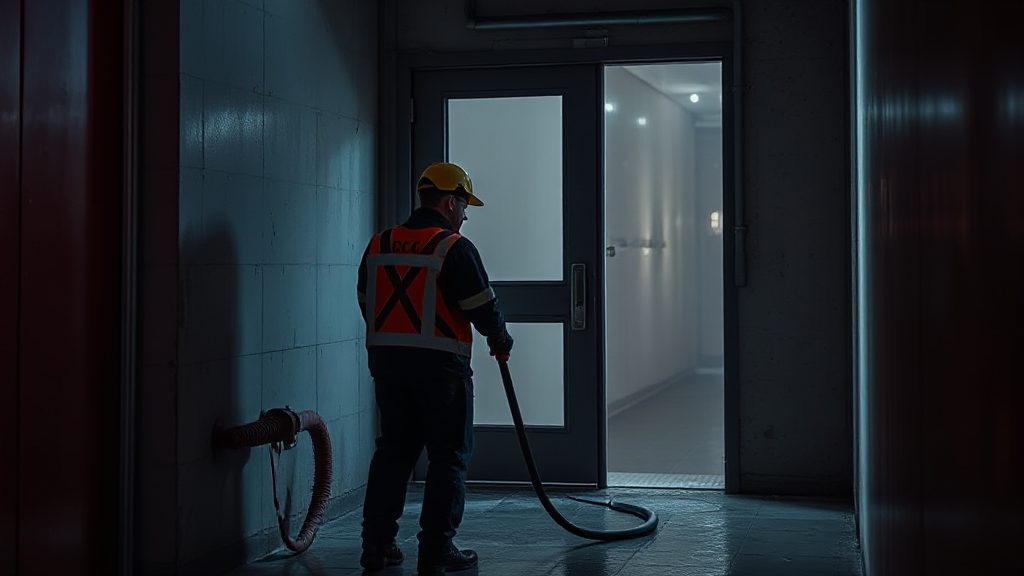
How to Verify a Desentupidora Before Opening Your Cidade Patriarca Door
You hear the buzzer, see a van with no logo, and a man says he is here to fix the clog. Before you turn the latch, you need one answer: is this a legitimate desentupidora Cidade Patriarca service or a stranger with a drain snake? The safe routine is simple: confirm the company, confirm the technician, and confirm the price before anyone steps inside. This guide walks you through that routine step by step, with the red flags that should make you keep the door closed.
Start with the company, not the person at the door
Scams rarely begin with a bad technician; they begin with a company you cannot verify. Ask for the full legal name and the CNPJ (the Brazilian business registration number) before you discuss the clog. A real company will give it without hesitation. Then check whether the name matches the invoice, the website, and the phone number that called you.
If the caller cannot name the company or gives a name that changes when you ask again, that is your first warning. Legitimate teams know who employs them. For residents in Cidade Patriarca, the safest path is to contact a known provider directly rather than accepting a walk-in offer. A verified desentupidora Cidade Patriarca São Paulo SP will have a fixed address, a published phone line, and a service history you can check before the van arrives.
Documents to ask for before the work starts
- CNPJ and legal name that match the quote and the receipt.
- Written quote with the service, the price, and what is included.
- Technician ID or badge linked to the company, not a handwritten note.
- Receipt or invoice issued after the job, with the company’s details.
None of these documents should feel like a favor. A professional team carries them as standard practice. If the technician says the paperwork is “back at the office” and asks to start anyway, politely wait.
Check the technician and the vehicle at your door
The person at your gate should be able to explain the job in plain language. Ask what equipment will be used, how long it should take, and whether the work could damage the pipes. A trained technician answers directly. Someone who deflects or rushes you toward a signature is a risk.
Look at the vehicle. An unmarked van is not automatically a scam, but it removes one layer of accountability. Note the plate and compare it with the company information if you can. A branded vehicle, a uniform, and a visible company phone number are small signals that add up.
Behavior that should raise your guard
- Pressure to decide immediately or a “today-only” discount.
- A price that changes after the work begins.
- Refusal to put the quote in writing.
- Requests for cash only, with no receipt.
- Offers to “check” other pipes without your permission.
Any one of these is a reason to pause. Two or more together are a reason to send the technician away and call a company you chose yourself.
Compare quotes and understand what you are paying for
Price is where many residents get hurt, because drain work is hard to judge from the outside. A trustworthy quote separates the service from the extras: the inspection, the unclogging method, the cleanup, and any parts. Ask whether the price covers a return visit if the clog comes back within a short period.
For a straightforward blockage, a simple quote is normal. For larger jobs such as hydrojetting or septic tank cleaning, ask for a short written description of the method. A company that explains the difference between clearing a drain and cleaning the whole line is showing you it knows the work. You can also compare a local provider such as a desentupidora em Cidade Patriarca São Paulo SP against a national call center, which often subcontracts and adds a layer between you and the technician.
| Signal | What it suggests |
|---|---|
| Written quote with company details | Accountability and a clear price |
| Verbal price only | Room for surprises later |
| Technician explains the method | Real training and experience |
| Technician avoids questions | Possible inexperience or pressure tactics |
Set house rules before anyone steps inside
You do not need to be rude to be safe. Tell the technician where to work, which bathroom or drain is affected, and that you will stay nearby. Keep valuables out of sight and ask for the work area to be left clean. A professional accepts these boundaries without argument.
Agree on payment only after the job is done and you have seen the result. Ask for the receipt before the technician leaves. If the problem returns soon after, a company with a clear contact line and a written record is far easier to hold accountable than someone who took cash and disappeared.
A quick pre-door checklist
- Confirm the company name and CNPJ.
- Ask for the price in writing.
- Check the technician’s ID and vehicle.
- Set the work area and payment terms.
- Keep the receipt and the company’s phone number.
This routine takes a few minutes and protects you from the most common drain-service scams. Verification before access is the single most effective protection a resident can use.
Frequently asked questions about verifying a desentupidora
Is an unmarked van always a sign of a scam?
No. Some small legitimate teams use plain vehicles. Treat it as one signal among several, and rely more on the CNPJ, the written quote, and the technician’s willingness to answer questions.
Should I pay a deposit before the service?
Be cautious with large upfront payments, especially in cash. A modest deposit for parts may be reasonable, but the full price should be tied to completed work and a receipt.
What if the technician refuses to give a receipt?
That is a serious red flag. Without a receipt you have little proof of who did the work or what was agreed. Decline the service and contact a company that provides proper documentation.
Can I check a company before calling?
Yes. Look for a published address, a fixed phone number, and clear service descriptions. A company that lists its services and contact details openly is easier to verify than one that only appears through a flyer.